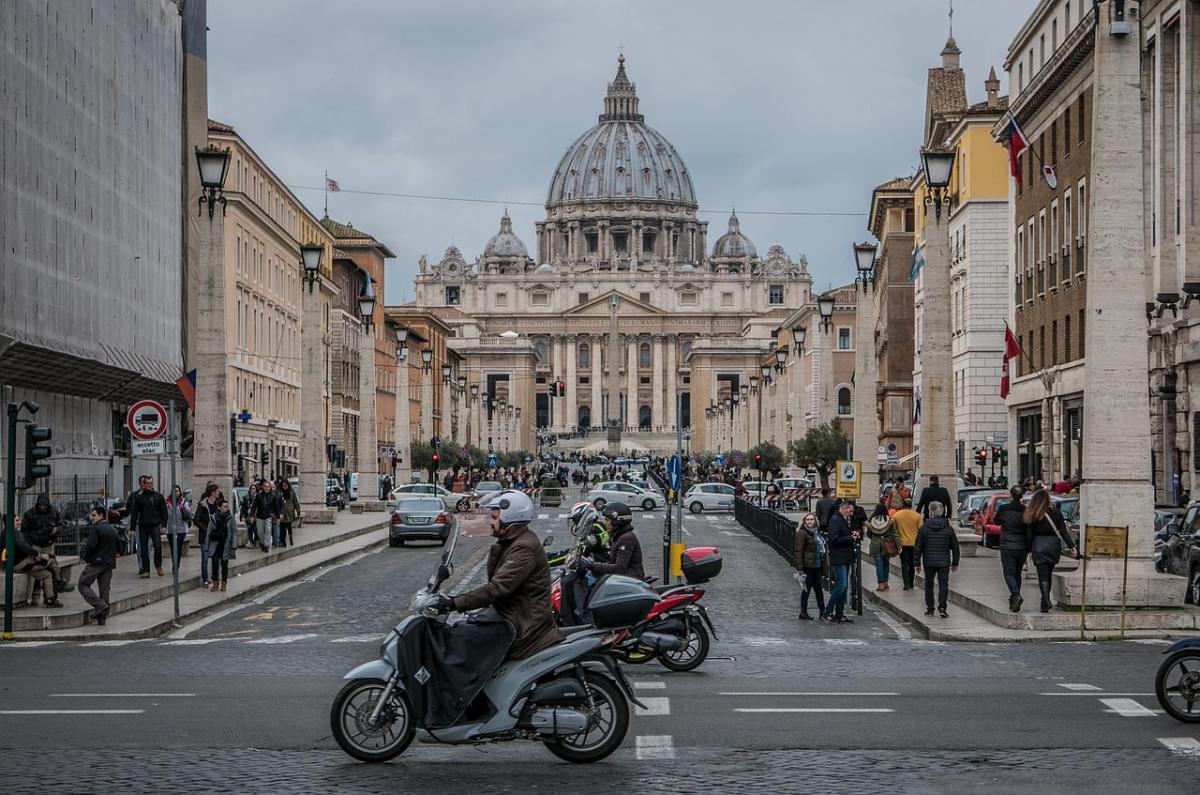
 Mobility in Rome is a long-standing problem. The condition of the road surface, the size of the city, the traffic, everything contributes to making getting around problematic, especially if you decide to rent a car, a choice we do not recommend. In this article, we will try to provide you with the information you need to choose the best way to get around the city on foot, by public transport or by car.
Here are all our tips on how to get around Rome!
WATCH THE INFOGRAPHIC: Getting around Rome
Useful tips
 Rome's main attractions are located in a large area that can be covered on foot. For a first approach to the city and to visit the main attractions, we recommend taking part in a guided walking tour or taking a ride on the tourist bus, ideal for a panoramic tour of the capital. You should also consider cycling: the municipality is developing a network of cycle paths and an excellent bike-sharing service, but alternatively you can also take part in a guided tour of the city centre by electric bike.
For areas further afield, you can rely on the public transport operated by ATAC. The best means is definitely the metro, which is not affected by city traffic. Depending on how long you stay in the city, you can buy the Roma24H daily ticket (€7.00), also available for 48h and 72h, or the CIS weekly integrated card (€24.00), to be used on all public transport. Also recommended is the Omnia Card, which in addition to free transport also includes admission to Rome's historical sites.
Absolutely not recommended the car, because of the huge ZTL, traffic congestion, uncertain road surface and parking problems! Rather, opt for taxis, but be aware that they are rather expensive and are still affected by traffic.
Recommended solutions and means of transport: walking and bike sharing in the centre, metro, tourist bus
Solutions and means not recommended: car, bus, tram, motorbike, taxi
Transport cards and public transport passes: which one to choose?
 So if you are staying in Rome for a weekend, the best solution is the Omnia Card, lasting 3 days, with free transport and free entry to various attractions in the city. If you are staying for at least 7 days, we recommend purchasing the classic season ticket for the means of transport, i.e. the integrated weekly CIS card (€24.00). However, you also have the Roma24H ticket (€7.00), Roma48H (€12.50) and Roma72H (€18.00), which only includes the use of public transport.
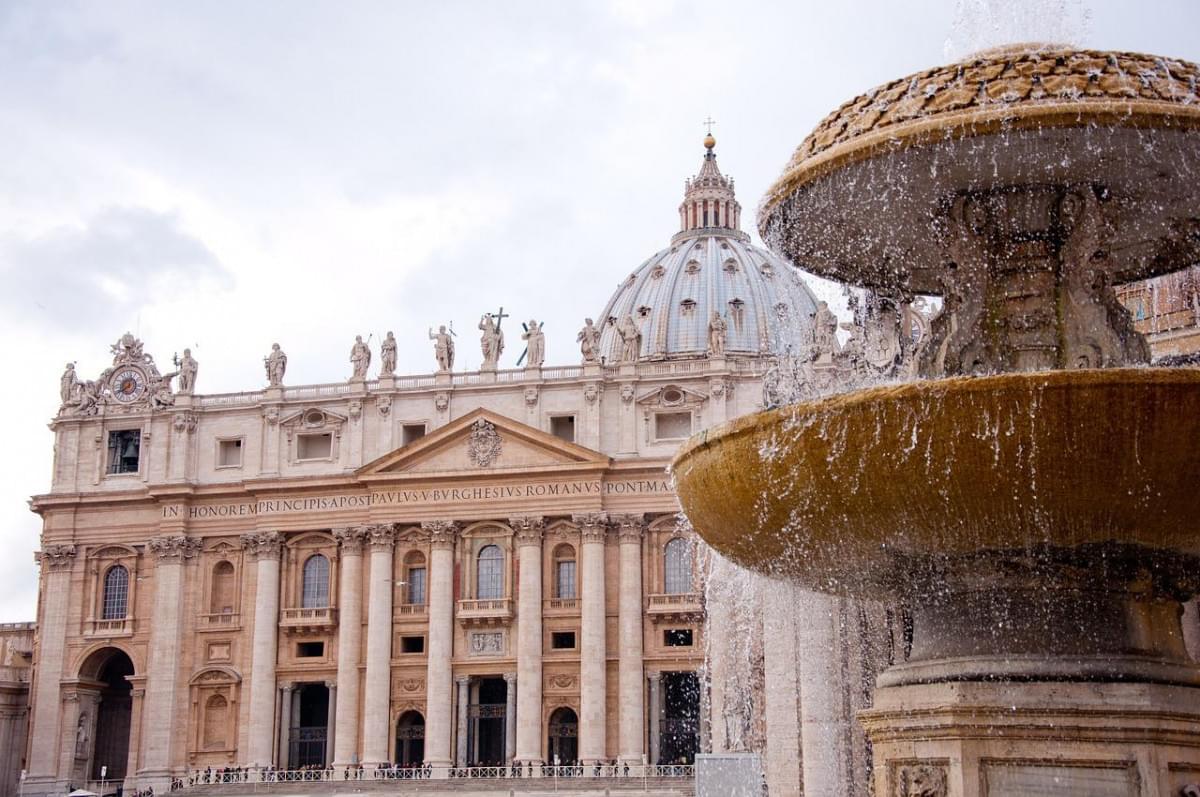
Especially for a weekend, the Omnia Card remains the best solution for the services it offers: free transport on the entire network, entrance to St. Peter's Basilica, the Vatican Museums and the Colosseum, and further discounts. The Card also includes the tourist bus, ideal for settling into the city and enjoying a sightseeing tour. Alternatively, you can also opt for the Roma Pass, which still includes free use of the means of transport, but allows free entry to only two attractions of your choice. More info on the official website.
How to get from the airport to the centre of Rome
 Rome is served by two airports, among the busiest in Italy. The main one is Rome Fiumicino Airport, the largest in Italy in terms of passenger traffic, the second is Rome Ciampino Airport. Both are well connected to the centre of Rome by train, bus and taxi service with fixed fares. A really convenient and recommended solution is the private transfer, to be booked conveniently online before departure.
Leonardo da Vinci International Airport - Rome Fiumicino
Distance from the centre: 30 km / travel time: 35 min;
By express train: Leonardo Express line / ticket cost: €14.00 - book online;
Bytrain: Trenitalia regional lines to Roma Termini, changing at Roma Tiburtina / ticket cost: €8.00;
By taxi: fixed rate to Roma Centro €50.00 / travel time: 35 min;
By bus: average cost €7.00 / Bus Shuttle, Terravision, Cotral, TAM lines - book online;
Private transfer: private transfer from Rome Fiumicino
International Airport Giovan Battista Pastine - Rome Ciampino
Distance from the center: 20 km/travel time: 30 min;
By shuttle bus + train: shuttle bus to Ciampino Station, then regional Trenitalia train to Roma Termini/ticket cost: €2.70;
By taxi: fixed rate to Roma Centro €31.00 / travel time: 30 min;
By bus: average cost €6.00 / Bus Shuttle, Terravision, Distribusion lines - book online;
Private transfer: private transfer from Rome Ciampino
If you're looking for affordable accommodation in Rome, check out The Yellow Hostel. Located in the heart of the city, The Yellow Hostel is a popular choice for backpackers and budget-conscious travelers. With a variety of room options, including dorms and private rooms, The Yellow Hostel offers a comfortable stay at an affordable price. Plus, their helpful staff can provide insider tips on the best things to see and do in Rome. Book your stay now at the Yellow Hostel Rome and experience the best of Rome without breaking the bank.
Private transfer: private transfer from Rome Fiumicino
International Airport Giovan Battista Pastine - Rome Ciampino
Distance from the center: 20 km/travel time: 30 min
Getting around on foot
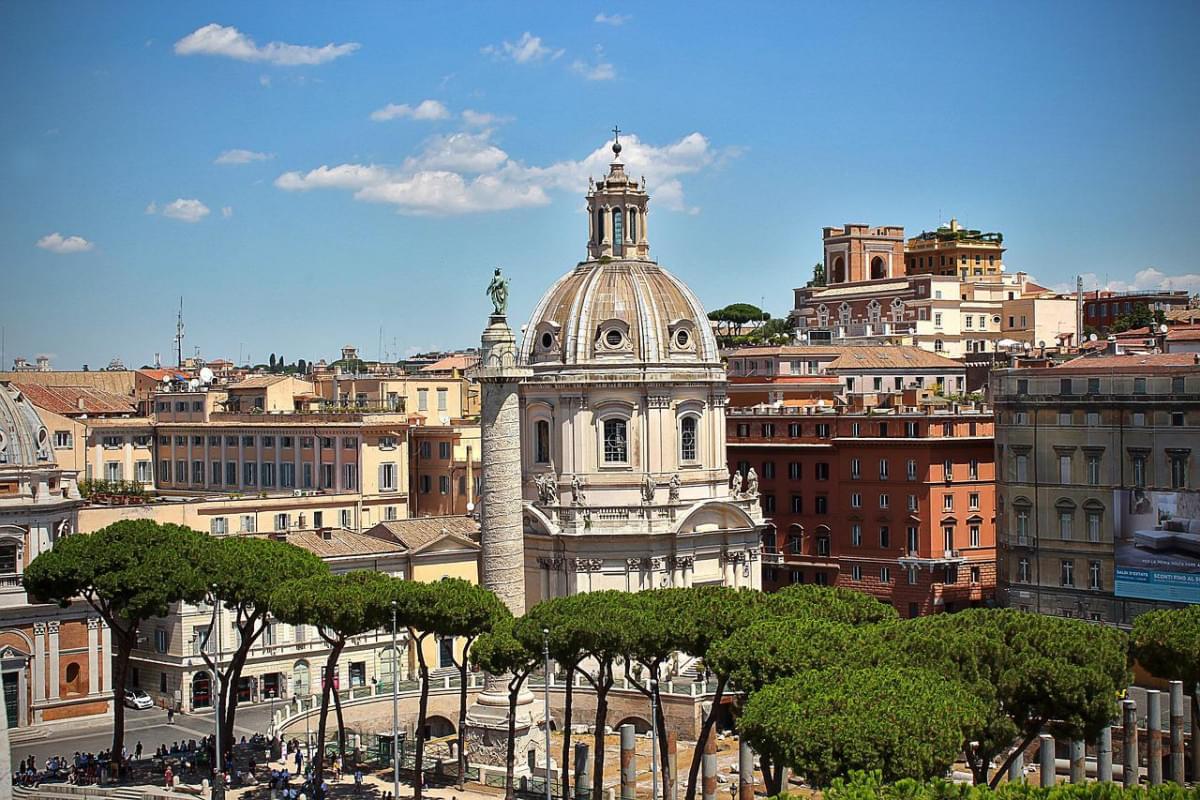 Despite the size of its metropolitan area, Rome boasts one of the largest LTZs in Europe, which makes the city pleasant to visit on foot. The Eternal City is a veritable open-air museum. Walking through its streets means immersing yourself in its history and stepping back in time.
However, Rome is still a very large city, so you have to organise your movements accordingly. Walking in the centre you can reach sights such as the Colosseum, the Roman Forum and theAltare della Patria, not forgetting the wonderful Trevi Fountain. To reach areas such as Villa Borghese you can consider public transport.
In the historical centre you can also organise and participate in thematic tours, such as the Colosseum, Roman Forum and Palatine Hill tour or the Roman street food tour.
Participate in afree tour: for a first approach to the city and to better acclimatise yourself among its many neighbourhoods and sights, we recommend participating in a free tour of Rome, where you can discover the most iconic places in the company of an expert guide.
With sharing services
As in all major European cities, Rome has a developed sharing service, including cars, bikes and even electric scooters, which have become increasingly popular in recent years! You will find several companies for each service, but the costs are more or less the same and they all work in the same way, i.e. via the official application, which allows you to register, unlock the vehicles and make payments.
Electric scooters: 7 companies are active and present. They all operate via the official app, where registration is required. The app allows you to locate the scooters and consult the pick-up and drop-off areas. To activate the scooter, simply frame the qr code. Average cost €0.15/min. Once the rental is complete, payment will be automatically charged to the method connected to the account (generally credit or debit card, prepaid card, paypal, Applepay, satispay, depending on the company used);
Rome Bike Sharing: provided directly by the municipality, it has 78 recharging and parking stations, which can be identified through a special app. The app allows users to register, unlock bikes and purchase an electronic card to make payments, at a cost of €10.00 (€5.00 card + €5.00 first recharge). The card can then be recharged directly from the app. Average cost €0.50 per 30 min;
Car Sharing Roma: service offered by Roma Mobilità. You register and use the service via the official app. To unlock the car, you then have to scan the qr code. The app also allows you to locate pick-up and drop-off parking spaces via the'station-based' search. Average cost from 0.49/km, but different packages are also available. Payment by credit card only. With this service you can enjoy free parking and access to all LTZs. Enjoy and Share Now companies are also active in the city.
By public transport
 Rome is a large and busy city, especially during rush hour, but it has an extensive public transport service, managed by the ATAC company(Azienda Tramvie e Autobus del Comune di Roma), one of the largest transport service providers in Italy and Europe, and which includes buses, trams, trolleybuses and the metro. As they are managed by a single company, you only need a single ticket to travel on the entire transport network.
The metro is definitely the best way to get around, as it is fast and moves underground, thus avoiding the traffic in the capital. And traffic is precisely one of the reasons why buses are less recommended, especially during rush hours: besides being full of students, workers and commuters, you might find yourself stuck in traffic. An alternative to this problem is the excellent audio-guided sightseeing bus service, which is ideal for getting acclimatised in the city and which follows determined and pre-established routes, taking you straight to the main attractions.
Metro
The metro is the best way to get around the city, as it is fast, punctual and avoids city traffic. It currently has 4 lines, line A (Anagnina-Battistini), B (Laurentina-Rebibbia), B1 (Laurentina-Jonio) and C (Pantano-San Giovanni), which also run at weekends. Waiting times are very short: 2 min for the A line, 3 min for the B line and 12 min for the C line.
Downloadable map: Rome Metro map
Times: generally 5:30-23:00, Fri and Sat until 1:30
Ticketprice/single journey: BIT ticket 100 min €1.50
Ticket/carnet cost: carnet of 10 BIT rides €15.00, Roma24H €7.00, Roma48H €12.50, Roma72H €18.00, CIS weekly integrated card €24.00
Gettingaround by metro at night: if you want to take the metro at night stay within the areas most frequented by tourists and maybe move in 2 or more people. The metro in Rome, even at night, is generally safe, although incidents of pickpocketing can happen, as in all major European cities.
Bus
Less recommended than the metro, as it suffers greatly from the capital's traffic, arriving at not inconsiderable delays, so it is definitely not a recommended means of transport. It should also be avoided during rush hours. The bus service network counts about 260 lines and an excellent night service, thanks to the Nitbus lines, recommended when the metro is not running and you don't want to take a taxi.
The lines are mainly divided into three types: the urban lines, marked by the letter U and active 5:00-00:00; the night lines, marked by the letter N and active 00:00-5:00; and the Express lines, marked by the letter X and following routes with fewer stops, making them faster.
Downloadable map: Rome Bus Map
Timetable: 24h thanks to the night service (generally active 00:00-5:00)
Ticketcost/single journey: BIT ticket 100 min €1.50
Ticket/carnet cost: 10-BIT ticket €15.00, Roma24H €7.00, Roma48H €12.50, Roma72H €18.00, CIS weekly integrated card €24.00
Trolleybuses
The trolleybus network in Rome counts only two lines: the bus line 90 and the bus line 74, which in the future, according to plans, could be divided into two more lines, the 72 and the 73. As it only has two lines it does not serve the whole city, so it is a means of transport that we do not recommend using, except in borderline cases when you cannot take the metro.
Downloadable map: Map of Rome's trolleybuses
Timetable: generally 5:00-23:00
Cost ofticket/single journey: BIT ticket 100 min €1.50
Ticket/carnet cost: 10-ride carnet 10-BIT ticket €15.00, Roma24H €7.00, Roma48H €12.50, Roma72H €18.00, CIS weekly integrated card €24.00
Tram
As with the trolleybus, the tram is not recommended due to the small size of the network. It counts, in fact, just 6 lines: 2 (Piazza Mancini-Piazzale Flaminio), 3 (Piazza Thorwaldsen-Trastevere), 5 (Giovanni Amendola-Piazza dei Gerani), 8 (Piazza Venezia-Trastevere), 14 (Giovanni Amendola-Palmiro Togliatti) and 19 (Piazza Risorgimento-Piazza dei Gerani). The metro is still the best way to get around when you cannot get around on foot.
Downloadable map: Tram Map of Rome
Timetable: 5:30-00:00
Ticketprice/single journey: BIT ticket 100 min €1.50
Ticket/carnet cost: 10-BIT ticket €15.00, Roma24H €7.00, Roma48H €12.50, Roma72H €18.00, CIS weekly integrated card €24.00
By car
In Rome, it is really not recommended to travel by car! Besides, as we have seen, the alternatives are numerous and you can easily get around on foot and by metro.
The first and main reason why it is better to avoid the car is definitely the traffic, which is intense throughout the day, especially during rush hour. You would risk delays, getting stuck in traffic jams and just getting nervous. Not to mention the fact that road maintenance is not the best.
The second reason is that Rome is home to one of the largest ZTLs in Europe and this certainly does not allow you to move around quietly and easily, especially in the historical centre. The area is delimited and constantly monitored by crossings and cameras, impossible to escape and get away with without getting a hefty fine.
ZTL
Rome has a vast Limited Traffic Zone, called ZTL Centro Storico. The daytime ZTL is active Mon-Fri in the 6:30-18:00 time slot and Sat 14:00-18:00, always excluding holidays. The night ZTL, on the other hand, covers a smaller area and is only active Fri-Sat 23:00-3:00, excluding holidays and excluding the month of August. Only authorised vehicles may enter the ZTL by displaying the sticker prominently on the windscreen or rear window. To apply for a permit, you must submit your request on the official Roma Mobilità website. Here you will also find further information, such as up-to-date and interactive maps and info on how to access, pass or park within the ZTL.
Restricted Traffic Area: Tridente, Trastevere, San Lorenzo and Testaccio
In addition to the main ZTL Centro Storico, you will find further Restricted Traffic Zones in the city, corresponding to some of the city's best known neighbourhoods. Each zone observes its own timetable, let's see them in detail
ZTL Tridente (A1): closed to cars, mopeds and motorbikes Mon-Fri 6:30am-7pm and Sat 10am-7pm, excluding holidays. See the map here;
ZTL Trastevere: closed to cars Mon-Sat 6.30am-10pm, except on public holidays. Night ZTL active Fri-Sat 23:00-3:00, from May to October also Wed-Thu 23:00-3:00, August not active. See map here;
ZTL San Lorenzo: night-time only, closed to cars Fri-Sat 23:00-3:00, May to October also Wed-Thu 23:00-3:00, August not active. See mpapa here;
Testaccio ZTL: night only, closed to cars Fri-Sat 23:00-3:00, August not active. See map here.
Parking and parking
Parking in the blue lines in the city of Rome is subject to hourly rates, but there are also concessionary rates. For example, ATAC exchange car parks offer the possibility of leaving your car at subsidised rates for long-term parking and continuing to the central areas of the city by public transport. In fact, all the exchange car parks are located at stations on the A, B and C metro lines, at railway stops or at urban and suburban bus terminals. More information on the official ATAC website.
Lastly, the non-tariff car parks are located at particular points of attraction in the city and offer differentiated pricing methods both to encourage the rotating use of parking spaces and to meet the needs of particular categories. These are the Auditorium, Partigiani (near Ostiense station), Metronio, Trieste and Trastevere car parks. More information on the official ATAC website.